
Dentures Palos Heights
A New Smile Is Within Your Research

Millions of Americans struggle with the challenges of edentulism (the state of being toothless). Fortunately, modern dentistry offers a number of reliable, high-quality tooth replacement options. Yes, dentures are better than ever! Here at Revival Dentistry in Palos Heights, Dr. Young and our team are proud to provide custom dentures to help our precious patients enjoy improved oral function and renewed confidence. Read this page to learn more, or contact us directly to set up your consultation. We look forward to serving you!
Why Choose Revival Dentistry for Dentures?
- Custom-Designed for Each Patient
- Traditional and Implant Dentures Available
- Highly Skilled & Compassionate Dental Team
Who Is a Good Candidate for Dentures?
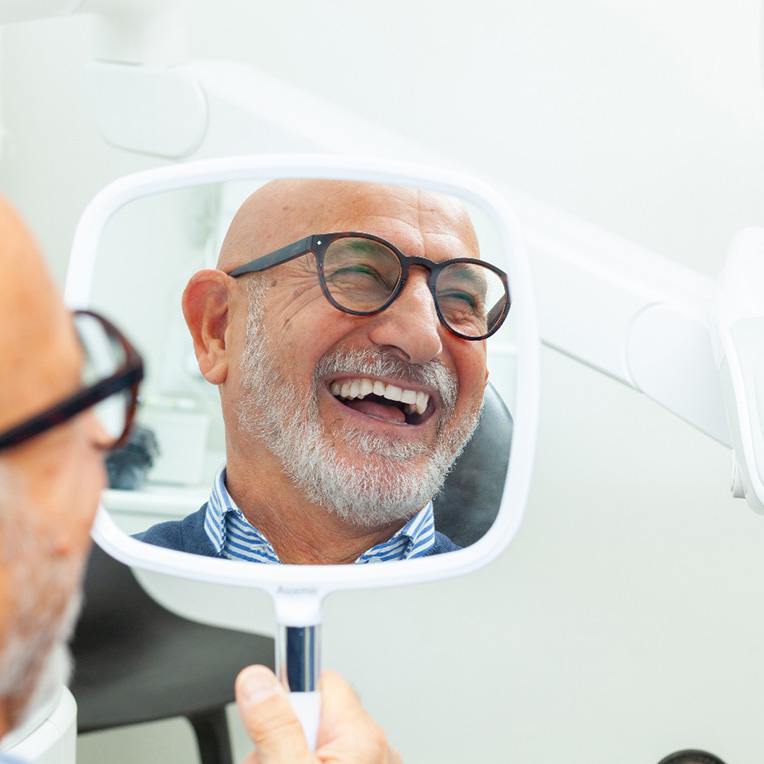
Dentures are a great option for almost anyone who has lost more than a few teeth. During your consultation, we will examine your mouth to determine if your gums and jawbone are healthy enough to support a prosthetic. Then, we can discuss which type of denture would work best for you. If you are not yet a candidate for dentures, you might become one after some preliminary care, such as gum disease treatment.
Types of Dentures
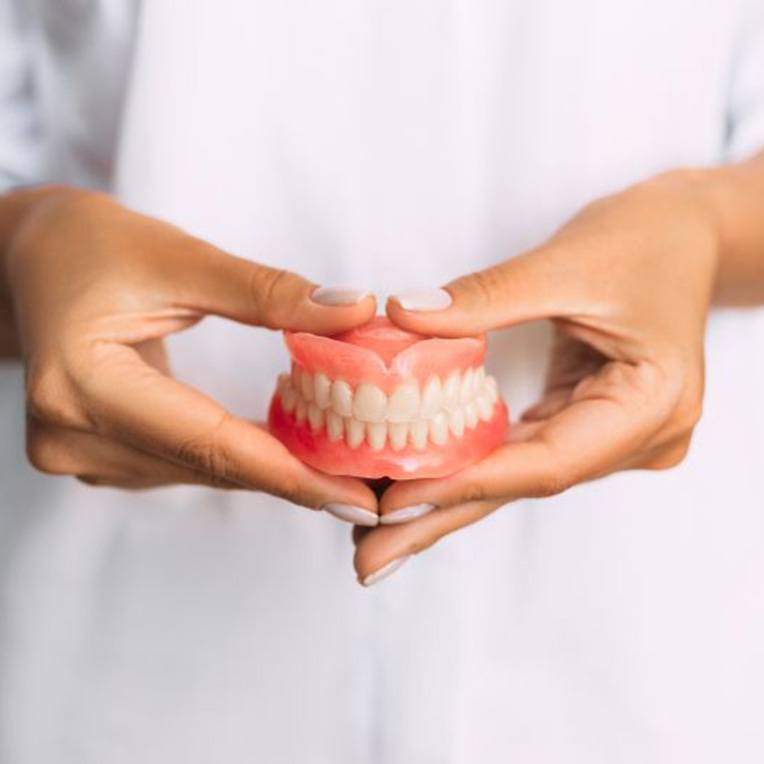
There are a few different types of dentures, and the one that is best for you will depend on the extent of your tooth loss, your personal preferences, and other factors. Below, you will find a brief overview of the most popular denture options: partial dentures, full dentures, and implant dentures.
Partial Dentures
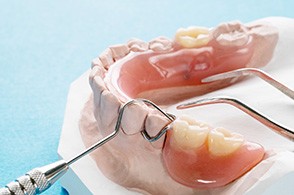
As their name indicates, partial dentures do not replace a full arch of teeth. Rather, they fit in among the remaining natural teeth to fill in the gaps. They can even replace teeth at multiple locations throughout an arch. Small metal or acrylic clasps help them to remain in place through eating and speaking.
Full Dentures
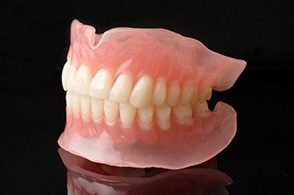
Full dentures replace an entire arch of missing teeth. They usually have an acrylic base along with porcelain or acrylic teeth. Each full denture is carefully made to suit the unique mouth of the person who will wear it. Natural suction or adhesive helps them to remain secure in the mouth during daily activities.
Implant Dentures
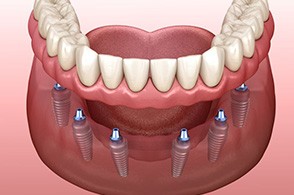
Instead of relying on suction, clasps, or adhesive to stay in the mouth, implant dentures are actually anchored in the jawbone via prosthetic tooth roots (dental implants). Although they come with a more complex treatment process than traditional dentures, they are incredibly sturdy and can even support jawbone health. We often recommend them as the best option for qualified patients.
The Benefits of Dentures

Some of the most noteworthy benefits of dentures include:
- Customized Fit: The denture process is tailored to your unique mouth, leading to a comfortable and functional prosthetic.
- Natural Appearance: Dentures are crafted to resemble real teeth, so you should be able to smile with confidence.
- Improved Nutrition: With dentures, you can enjoy a wider variety of healthy foods, which in turn supports your overall health.
- Facial Support: Dentures keep your cheeks from appearing sunken. Implant dentures can even preserve your jawbone and maintain the natural contours of your face.
- Easy Maintenance: You will find that cleaning and caring for dentures is easy.
Dentures FAQs
How long will you have to wait to get dentures after your teeth are pulled?
The traditional wait time between tooth extractions and the completion of the process for dentures in Palos Heights is 6 – 8 weeks. This allows time for your gums to heal and settle into their new shape, meaning you can get a prosthetic that fits incredibly well.
However, the timeline can vary. Some patients opt to get immediate dentures, which are made before tooth extractions and ready for use immediately afterward. The fit of these is not as reliable as their traditional counterparts.
If you are getting implant dentures, there may be several months between your extractions and the placement of your final denture. If you are getting All-on-4, you will receive a temporary denture on the same day as your extractions/implant placement surgery.
What is the best material to use for dentures?
The base of dentures is usually made of acrylic, but the teeth can be made of various materials.
Porcelain is popular because it is incredibly lifelike and very durable. It has a hard, non-porous surface that promotes excellent oral hygiene. Acrylic is another popular choice. It is slightly softer than porcelain, so if you still have some of your natural teeth, it will be gentler on your enamel than other options.
Our team can advise you on which material would be best for your “dentures near me.”
What should you do if your dentures break?
Do not try to repair your dentures on your own; using household materials like superglue could actually worsen the damage and even make your prosthetic totally unwearable. Plus, many common adhesives contain toxic materials.
Instead, call our office. We are able to perform some simple repairs right in our practice. Otherwise, we may have to send your dentures to a laboratory for repairs. In some cases, it might be necessary to replace the dentures altogether.
What type of denture adhesive should I use?
The type of denture adhesive that you should use boils down to personal preference!
Many people like creams because they are strong and comfortable; they are great for sensitive gums. Powder is another option; it is easy to apply and provides all-day hold. Strips are convenient and can prevent you from over-application of adhesive.
You might have to experiment with a few different products before you find one that you really like.
Can dentures become ill-fitting?
Yes, traditional (non-implant) dentures do become ill-fitting over time. That is usually not because of the dentures themselves; they are likely to retain their original shape. Rather, your mouth will change over time. Your jawbone and gums may shrink slightly as time passes.
We can periodically reline your dentures to help them retain their fit. However, they will eventually need to be replaced, likely after 5 – 7 years or so.